
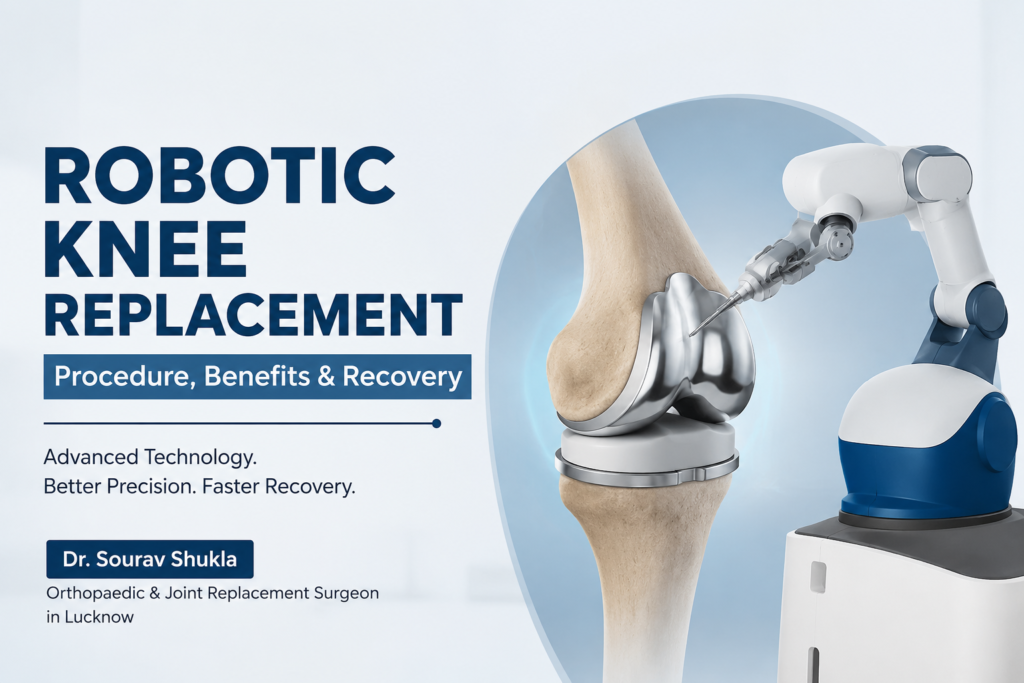
Robotic Knee Replacement: Procedure, Benefits and Recovery
Knee pain can gradually turn simple activities such as walking, climbing stairs, standing up, or getting through a normal workday into difficult tasks. For people with advanced knee arthritis or severe joint damage, medicines, physiotherapy, lifestyle changes, and injections may eventually stop providing adequate relief. In such cases, knee replacement surgery may be considered.
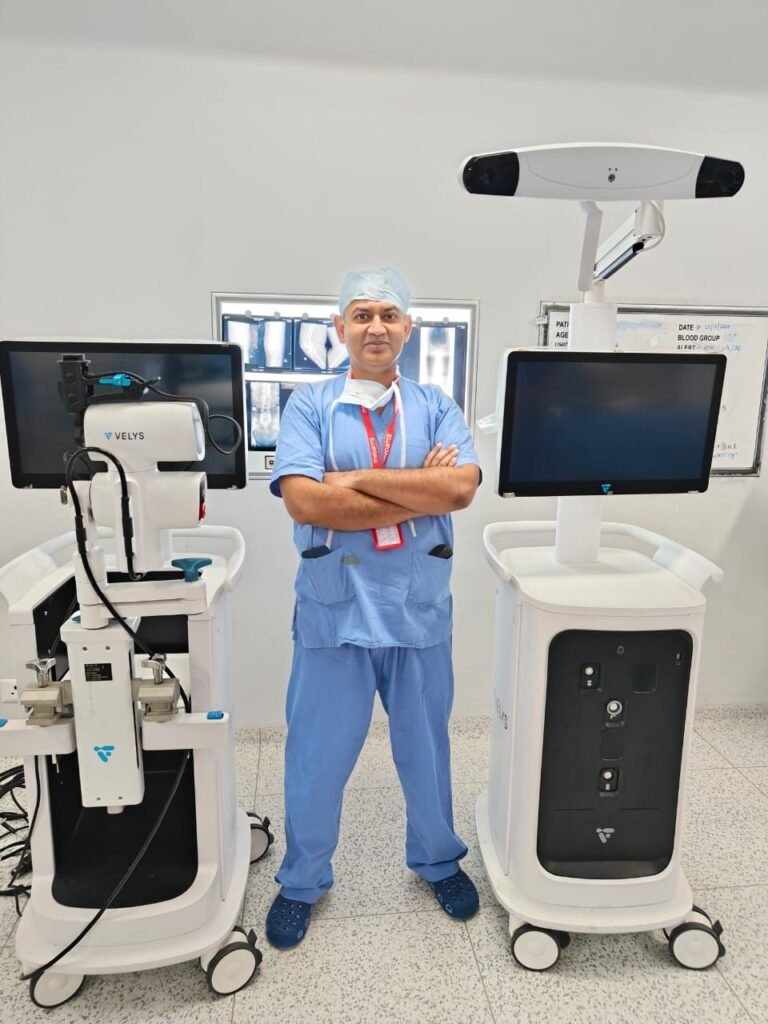
Advances in orthopaedic surgery have introduced robotic technology to assist surgeons during knee replacement procedures. Robotic knee replacement in Lucknow combines the expertise of an orthopaedic surgeon with technology designed to support detailed surgical planning and precise execution.
Dr. Sourav Shukla is an experienced orthopaedic and joint replacement surgeon in Lucknow whose clinical work includes advanced knee replacement procedures. For patients exploring surgery, understanding what robotic knee replacement involves, its potential benefits, limitations, and recovery process can help them have a more informed discussion with their surgeon.
This guide explains the robotic knee replacement procedure, benefits, recovery, candidacy, and what patients can expect before and after surgery.

What Is Robotic Knee Replacement?
Robotic knee replacement is a form of knee replacement surgery in which the surgeon uses a robotic-assisted system for planning and performing specific stages of the operation. The technology can provide detailed information about the patient’s knee anatomy and help the surgeon execute the planned bone preparation and implant positioning.
The term “robotic” does not mean that a robot independently performs the surgery. The orthopaedic surgeon remains in control of the procedure. The robotic system functions as a surgical tool that can assist with planning, measurements, alignment, and execution depending on the technology being used.
Patients considering robotic knee replacement in Lucknow should therefore focus not only on the availability of robotic technology but also on the experience of the surgeon, the patient’s individual condition, implant selection, rehabilitation, and overall treatment plan.
When Is Knee Replacement Surgery Recommended?
Knee replacement is generally considered when knee joint damage becomes severe enough to significantly affect mobility, comfort, and quality of life, particularly when appropriate non-surgical treatments are no longer providing satisfactory relief. For patients experiencing advanced knee problems, robotic knee replacement in Lucknow may be considered after a detailed evaluation by an orthopaedic specialist.
Osteoarthritis is one of the most common reasons for knee replacement. Over time, the cartilage that helps the knee move smoothly can wear down, causing pain, stiffness, swelling, reduced movement, and difficulty performing everyday activities.
A specialist may evaluate a patient for robotic knee replacement in Lucknow when they experience:
- Persistent or severe knee pain that affects daily activities
- Difficulty walking, climbing stairs, or standing for extended periods
- Significant knee stiffness or restricted range of motion
- Pain at rest or during the night
- Progressive joint deformity
- Advanced arthritis visible on imaging
- Limited improvement despite appropriate conservative treatment
The decision to undergo robotic knee replacement in Lucknow should be based on an individual clinical assessment rather than age or an X-ray finding alone. The orthopaedic surgeon evaluates symptoms, joint damage, overall health, mobility, and previous treatments before recommending the most appropriate treatment approach
How Does Robotic Knee Replacement Work?
The goal of knee replacement surgery is to remove damaged joint surfaces and replace them with artificial components designed to restore joint function and reduce pain.
Robotic assistance adds technology to the planning and surgical process. Depending on the robotic platform, information about the patient’s anatomy may be collected through imaging or during surgery. This information helps the surgeon plan aspects such as bone preparation, implant size, positioning, alignment, and soft-tissue balance.
During surgery, the robotic system helps the surgeon work according to the established plan while providing measurements or guidance.
Does a Robot Perform the Surgery?
No. This is an important distinction for patients researching robotic knee replacement in Lucknow.
Robotic systems are designed to assist qualified surgeons; they do not replace surgical expertise. The surgeon assesses the patient, develops the treatment plan, controls the operation, makes clinical decisions, positions the implants, and manages unexpected findings or complications.
Technology is one part of the procedure. The surgeon’s experience, judgement, surgical technique, patient selection, and postoperative care remain essential.
Robotic Knee Replacement Procedure: Step by Step
Although every patient’s treatment may differ, a robotic-assisted knee replacement typically involves several key stages.
1. Preoperative Evaluation
Before recommending surgery, the orthopaedic surgeon evaluates the patient’s symptoms, medical history, physical examination findings, mobility, and previous treatments.
X-rays and, where appropriate, other investigations may be used to assess the severity and pattern of joint damage. General health is also evaluated to determine whether the patient is medically prepared for surgery.
This stage is important because not every patient with knee pain needs a knee replacement.
2. Patient-Specific Surgical Planning
Robotic-assisted systems allow the surgeon to develop a surgical plan based on the anatomy and condition of the patient’s knee.
Depending on the platform, anatomical data may be obtained through preoperative imaging or mapping performed during the operation. The surgeon can use this information to plan implant placement and bone preparation.
The objective is to create a plan tailored to the individual knee rather than relying solely on standard measurements.
3. Anaesthesia and Surgical Preparation
On the day of surgery, the patient receives the type of anaesthesia considered appropriate by the surgical and anaesthesia teams.
The knee is then prepared under sterile conditions before the surgeon begins the procedure.
4. Robotic-Assisted Bone Preparation
The damaged surfaces of the knee joint are prepared to accommodate the artificial components.
The robotic system can provide guidance based on the surgical plan, helping the surgeon execute bone preparation within planned parameters. The surgeon remains responsible for and in control of the surgical steps.
5. Implant Positioning and Joint Assessment
After preparation, the artificial knee components are positioned. The surgeon evaluates alignment, stability, movement, and soft-tissue balance before completing the procedure.
Robotic technology can provide additional intraoperative information to support these decisions.
6. Closure and Postoperative Care
Once the surgeon is satisfied with the implant position and knee function, the incision is closed and the patient is moved to postoperative care.
Pain management, mobilisation, physiotherapy, blood-clot prevention, wound care, and other aspects of recovery are planned according to the patient’s condition and clinical protocol.

Benefits of Robotic Knee Replacement
The growing interest in robotic knee replacement in Lucknow comes from the potential advantages that technology can offer during surgical planning and execution.
However, outcomes vary between patients, and robotic assistance should not be interpreted as a guarantee of a particular result.
Greater Precision in Surgical Planning
Robotic systems can provide detailed anatomical information and measurements that assist the surgeon in planning bone cuts and implant positioning.
This technology is intended to support precise execution of the surgical plan.
Personalized Approach
Every patient’s knee anatomy is different. Robotic-assisted surgery can help surgeons create a plan based on the individual’s anatomy and joint characteristics.
This patient-specific approach may help the surgeon determine appropriate implant positioning and joint balance.
Support for Implant Alignment and Positioning
Proper implant positioning is an important component of knee replacement surgery. Robotic technology provides intraoperative guidance that can assist surgeons in achieving the intended position and alignment.
The appropriate alignment strategy, however, depends on the patient’s anatomy and the surgeon’s clinical judgement.
Real-Time Surgical Information
Some robotic platforms provide information during surgery about alignment, joint movement, and soft-tissue balance.
This allows the surgeon to assess the knee and make informed adjustments where clinically appropriate.
Potential for Efficient Recovery
Some patients may experience early recovery benefits following robotic-assisted knee replacement, but recovery is influenced by many factors, including age, general health, severity of joint disease, surgical technique, pain management, rehabilitation, muscle strength, and adherence to postoperative instructions.
Patients should discuss realistic recovery expectations with their surgeon rather than assuming robotic surgery automatically means faster recovery.
Robotic vs Conventional Knee Replacement
Both conventional and robotic-assisted knee replacement aim to relieve symptoms caused by severe joint damage and restore useful knee function.
In conventional knee replacement, surgeons use established surgical instruments and anatomical landmarks to prepare the joint and position the implant. In robotic-assisted surgery, technology provides additional planning, measurements, and guidance during selected stages of the operation.
Robotic assistance can support precision, but conventional knee replacement also has an established clinical history and can produce successful outcomes when appropriately performed.
The best technique for a particular patient depends on factors including knee anatomy, severity of arthritis, overall health, available technology, and the surgeon’s assessment and expertise.
Who May Be a Candidate for Robotic Knee Replacement?
A person may be evaluated for robotic knee replacement in Lucknow if severe knee joint damage is causing persistent symptoms and appropriate non-surgical treatment is no longer sufficient.
Potential candidates may include people with advanced osteoarthritis or other conditions that have caused significant joint deterioration.
Symptoms that may lead to surgical evaluation include persistent knee pain, stiffness, difficulty walking, reduced mobility, and limitations in daily activities.
However, candidacy cannot be determined from symptoms alone. A detailed consultation with an orthopaedic specialist is necessary to assess the joint and discuss suitable treatment options.
Recovery After Robotic Knee Replacement
Recovery is a structured process that continues well beyond the operation itself. The exact timeline differs between individuals, so patients should follow their surgeon’s and physiotherapist’s recommendations.
Immediately After Surgery
Following surgery, the medical team monitors the patient’s condition and manages pain. Movement may begin relatively early when medically appropriate.
Patients are generally encouraged to perform prescribed exercises and begin assisted walking according to their clinical condition.
Early Rehabilitation
Physiotherapy is an important part of knee replacement recovery. Early rehabilitation may focus on improving knee movement, reducing stiffness, strengthening the muscles around the joint, and gradually improving walking.
Patients may initially use a walker, crutches, or another mobility aid depending on their needs.
Returning to Daily Activities
As strength, balance, and mobility improve, patients may gradually return to everyday activities.
The timing for independent walking, driving, work, stair use, and other activities varies. Patients should obtain individual clearance from their surgeon rather than following a fixed universal timeline.
Long-Term Recovery
Improvement can continue for several months after knee replacement. Consistent rehabilitation, appropriate physical activity, weight management where relevant, and adherence to medical advice can support recovery.
High-impact activities may not be suitable after knee replacement, so patients should discuss long-term exercise and activity choices with their surgeon.
Importance of Physiotherapy After Knee Replacement
Surgery replaces the damaged joint surfaces, but rehabilitation helps patients regain movement, strength, confidence, and functional mobility.
A physiotherapy program may include range-of-motion exercises, muscle strengthening, walking practice, balance training, and gradual progression of daily activities.
Patients should follow the rehabilitation program prescribed for them. Doing too little can delay functional progress, while doing too much too soon may increase discomfort or interfere with recovery.
Risks and Considerations
Like any major surgical procedure, robotic knee replacement has potential risks. These can include infection, blood clots, bleeding, stiffness, persistent pain, nerve or blood-vessel injury, anaesthesia-related complications, implant-related problems, and the possibility of further surgery.
Robotic assistance does not eliminate the general risks associated with knee replacement.
Before surgery, patients should discuss their medical history, medicines, existing health conditions, expected benefits, potential complications, implant options, rehabilitation plan, and alternative treatments with their healthcare team.
Why Surgeon Expertise Still Matters in Robotic Knee Replacement
Technology can provide sophisticated planning and intraoperative guidance, but successful joint replacement involves more than a robotic system.
The surgeon must evaluate whether replacement is appropriate, understand the patient’s anatomy and symptoms, interpret clinical findings, choose the surgical strategy, manage soft tissues, position the implant, respond to unexpected circumstances, and oversee postoperative care.
For this reason, patients searching for robotic knee replacement in Lucknow should consider the surgeon’s experience in orthopaedics and joint replacement along with the technology available.
Dr. Sourav Shukla – Orthopaedic and Joint Replacement Surgeon in Lucknow
Dr. Sourav Shukla is an experienced orthopaedic surgeon whose practice includes joint replacement and advanced surgical management of knee conditions in Lucknow. Patients looking for robotic knee replacement in Lucknow can consult Dr. Sourav Shukla for a detailed evaluation and a treatment plan based on their individual knee condition.
For patients considering robotic knee replacement in Lucknow, consultation provides an opportunity to understand whether surgery is necessary, which surgical approach may be appropriate, what benefits can realistically be expected, and what the rehabilitation process may involve.
A responsible treatment approach begins with an accurate diagnosis and patient-specific assessment. In robotic knee replacement in Lucknow, robotic technology is used as a surgical aid to support planning and precision where clinically appropriate, while Dr. Sourav Shukla remains responsible for surgical decisions, treatment execution, and patient care.
Choosing Robotic Knee Replacement in Lucknow
If persistent knee pain is limiting your mobility or quality of life despite appropriate non-surgical treatment, an orthopaedic evaluation can help determine the cause and available treatment options.
For some people with advanced joint damage, robotic knee replacement in Lucknow may be an appropriate option. The procedure combines established principles of knee replacement with technology designed to support detailed planning and surgical precision.
The decision should be made after considering the patient’s symptoms, imaging findings, overall health, expectations, alternatives, and surgeon’s recommendation.
Conclusion
Robotic-assisted knee replacement represents an important advancement in modern orthopaedic surgery. By combining detailed planning and intraoperative technology with a surgeon’s clinical expertise, robotic systems can assist in precise execution of knee replacement procedures.
For patients exploring robotic knee replacement in Lucknow, understanding the procedure is an important first step. Robotic technology does not replace the surgeon and does not guarantee a specific outcome, but it can provide valuable tools for personalized planning and surgical guidance.
If knee pain, stiffness, or reduced mobility is significantly affecting daily life, consultation with Dr. Sourav Shukla can help determine whether knee replacement is appropriate and whether robotic-assisted surgery may be suitable for your individual condition.
Frequently Asked Questions
1. What is robotic knee replacement?
Robotic knee replacement is a knee replacement procedure in which a surgeon uses a robotic-assisted system for planning, measurements, and guidance during selected surgical steps. The surgeon remains in control throughout the operation.
2. Is robotic knee replacement better than conventional knee replacement?
Robotic technology can provide additional planning and intraoperative guidance, particularly for implant positioning and alignment. However, both robotic-assisted and conventional knee replacement can be effective. The appropriate approach depends on the patient’s condition and the surgeon’s assessment.
3. Who is suitable for robotic knee replacement in Lucknow?
Patients with advanced knee joint damage, persistent pain, stiffness, reduced mobility, and inadequate relief from appropriate non-surgical treatments may be evaluated for knee replacement. A specialist consultation is required to determine individual suitability.
4. How long does recovery take after robotic knee replacement?
Recovery varies from patient to patient. Early mobilisation and physiotherapy often begin soon after surgery when medically appropriate, while improvement in strength and function may continue over several months. Your surgeon and physiotherapist can provide a personalized recovery timeline.
5. Does the robot perform knee replacement surgery by itself?
No. The robotic system does not independently perform the operation. It assists the orthopaedic surgeon with planning, measurements, and surgical guidance. The surgeon remains responsible for and in control of the procedure.